

Table of Contents
- Introduction
- The RAM Crisis
- Agentic AI and Workflow
- Invisible Augmented Reality
- AI Scams
- The Blue Collar Boom
- Conclusion
What We Can See in 2026 in Technology
Introduction
As 2025 draws to a close, I wanted to share some insights on what I think will be important in the coming year.
With that in mind, I want to discuss my thoughts on several key areas:
- The RAM Crisis
- Agentic AI and Workflows
- Invisible AR
- AI Scams
- The Blue Collar Boom
Let me dive into each of these insights in detail.
The RAM Crisis
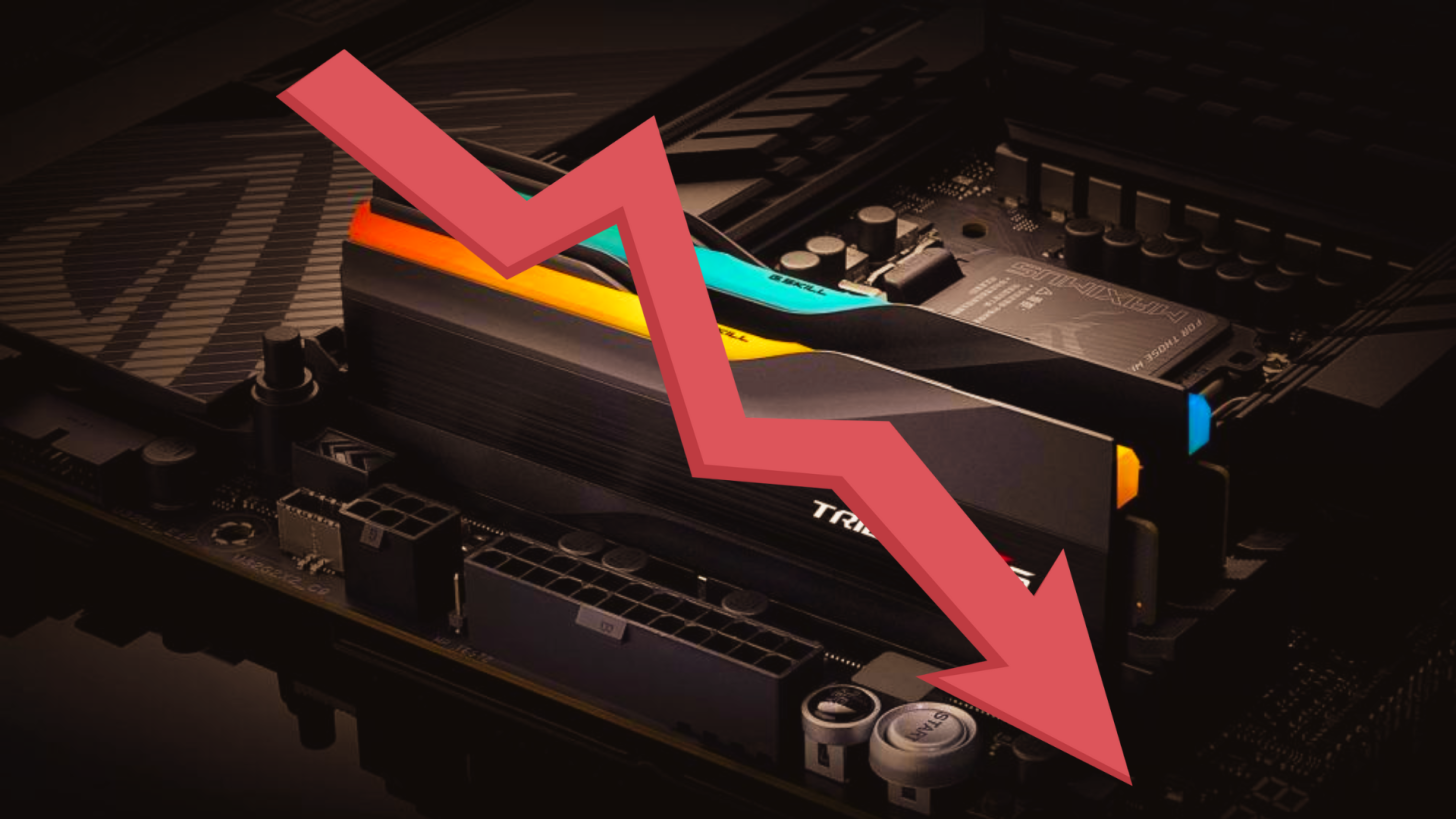
I predict that the current "artificial" RAM shortages will intensify over the next few months unless big tech companies face government regulation to prevent monopolistic behavior and maintain fair access to memory resources.
Since 2022, the semiconductor industry has already been struggling with capacity limits for High Bandwidth Memory (HBM) and DRAM, driven by the explosive demand from data centers and AI accelerators. Production ramps for newer 3nm nodes are still catching up, creating a "tight-rope" scenario where supply barely meets the voracious demand of AI models.
That being said, I think Google completing its vertical alignment with AI is a massive advantage. Unlike its competitors, Google relies on TPUs (Tensor Processing Units) rather than the standard NVIDIA GPUs. Their approach is proving to be more efficient and sustainable for long-term AI development, which allows them to sidestep some of the supply chain bottlenecks we are seeing elsewhere.
Of course, Nvidia, Microsoft, OpenAI, and Anthropic are not happy with Google's position. Currently, Google is the only major player not fully participating in the "cannibalistic" bidding wars for hardware that are inflating share prices across the industry.
I believe there is a bubble—similar to what Michael Burry predicts—but it may not reach the catastrophic levels of the 2008 crash. Unlike 2008, where every bank was exposed, this bubble is concentrated among a few key tech players. While valuations of AI-related chip makers have surged, the broader market dynamics will determine if the correction is severe or just a market adjustment.
If the bubble pops, the market will undoubtedly be in disarray for a bit. I am not certain if diversified giants like Microsoft will be heavily damaged, but I am certain that AI companies without full vertical integration (those renting their chips) will struggle to survive.
The fact remains that even if the financial bubble pops, the technology itself is here to stay. AI models will continue to improve because they are proven to be useful. In my own field of software development, despite being transferred to different departments several times, I still deliver at an impressive pace specifically because of AI acceleration.
I recently did a coding challenge where I implemented Dijkstra's algorithm in modern C++ and compared it to Gemini and GPT-5.2. Our code was similar, though I believe mine was more maintainable (variable naming-wise). However, it took me 5 minutes to write, whereas these LLMs in high-reasoning modes took just a minute of work to produce similar results.
Agentic AI and Workflow
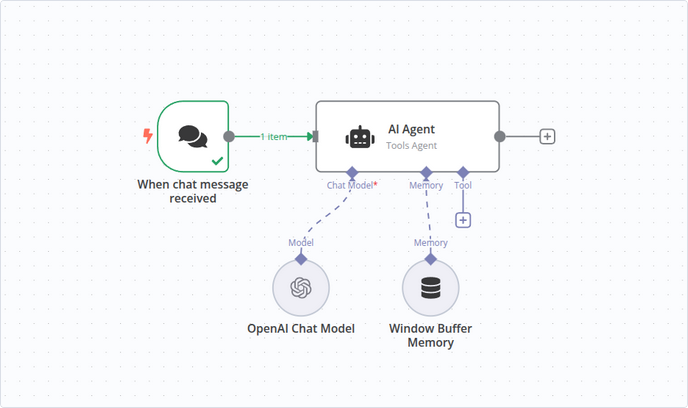
"Workflow" has been the buzzword of the year, and I expect this to dominate 2026. Currently, AI workflows are not fully mature, but companies have started implementing their own internal systems and adding AI capabilities on top of them.
I expect these workflow systems will mature significantly in 2026, leading to widespread adoption of Autonomous AI Agents. These won't just chat; they will handle complex, multi-step tasks like "plan this project" or "debug this module" without constant human hand-holding.
We are already seeing this trend with platforms like n8n, Zapier, and LangChain gaining traction in enterprise pilots. These tools are moving beyond simple automation to becoming "orchestrators" that can decide how to execute a task, not just follow a pre-defined script. However, true autonomy still faces reliability and safety hurdles. For 2026, "human-in-the-loop" systems will remain the standard for critical workflows to ensure governance and accuracy.
This evolution will blur the lines between traditional software development and AI-driven automation, creating new opportunities for developers who can orchestrate these agents rather than just writing code from scratch.
Invisible Augmented Reality
Augmented Reality (AR) is currently in its early stages, but I expect it to become seamless and integrated into our daily lives in 2026. The technology is finally becoming "invisible" and context-aware.
We are seeing this with devices using Directional Audio technology (like the Ray-Ban Meta glasses). These glasses have built-in speakers that fire sound directly into your ear canal so only you can hear it—no earphones required.
However, mass adoption faces technical hurdles. Battery life, heat dissipation, and display brightness are significant challenges that engineers are still solving. Until we have batteries that can power a high-resolution AR overly for a full day without overheating, premium models will remain a niche product for early adopters and professionals.
As innovation continues, I expect these invisible AR devices to become more sophisticated. We will move away from bulky headsets toward frames that look like normal eyewear but revolutionize how we interact with digital information.

Unfortunately, I think the premium models will remain expensive for the time being, so mass adoption may not happen as quickly as I’d hope. However, the trajectory is clear: I am looking forward to having less "monitor junk" and LCD screens cluttering my desk because virtual screens can finally take their place—a win for both productivity and the environment.
I know that in VR we can already spawn infinite virtual monitors, but 2026 will be the year this streamlines into lightweight AR that we can wear all day.
AI Scams
As generative AI improves at cloning images and audio, I expect scams to become significantly more sophisticated. Tools like Runway's Gen-2 and Adobe Firefly have already demonstrated photorealistic capabilities, and open-source models (like Stable Diffusion) can be fine-tuned by bad actors to bypass safety filters.
We’ve already seen issues on Kickstarter, where plenty of projects were created using AI-generated content that later turned out to be fraudulent vaporware.
There have also been reports of delivery scams where drivers use generative AI to create "fake proof of delivery" photos—placing a food bag on a virtual porch using Google Street View data to fool the refund system.

In 2026, we will see new scams that leverage this tech to create increasingly convincing fake content, making it nearly impossible for people to distinguish between real and artificial proof.
We need better digital literacy and verification tools to combat these threats, along with stronger regulations to hold platforms accountable. Detection technologies are advancing, but it remains an arms race. Realistically, next year will be a game of "cat and mouse." Critical thinking is highly encouraged.
The Blue Collar Boom
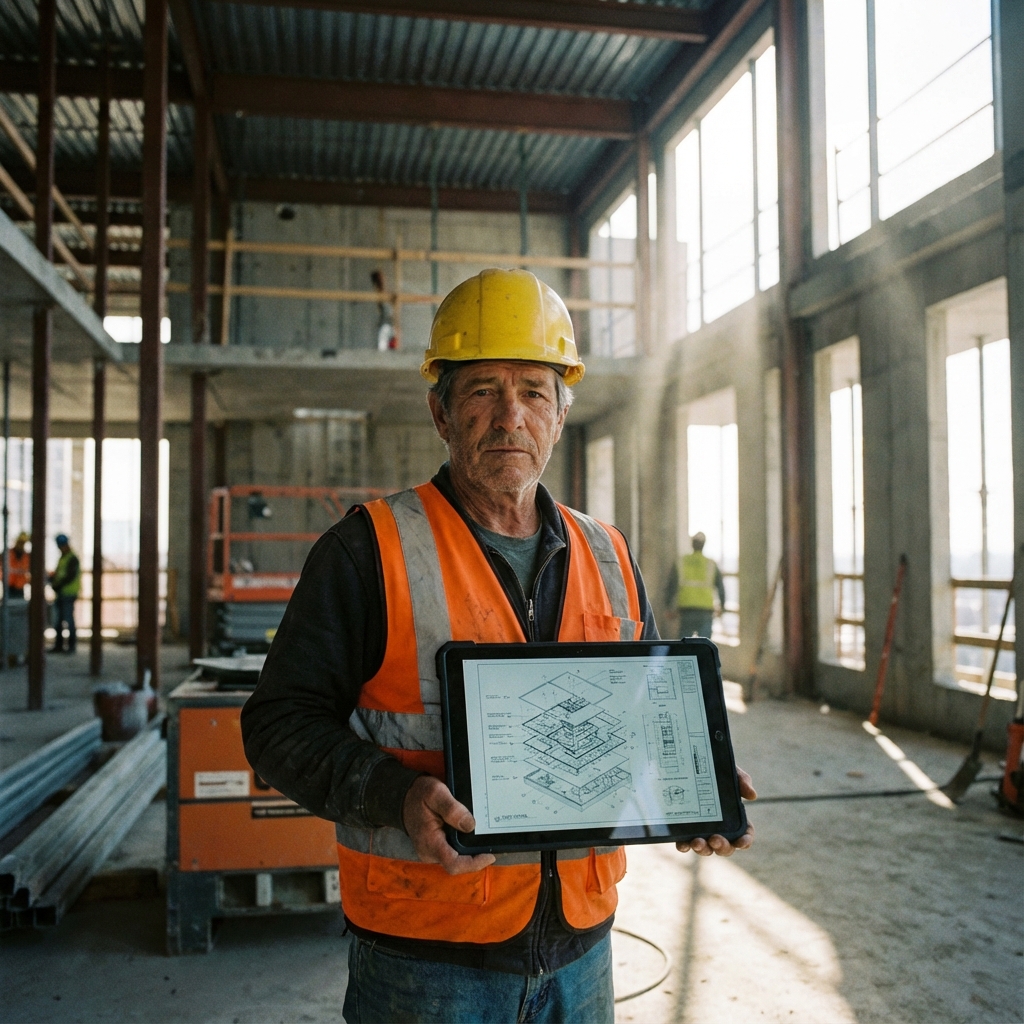
Here in the Philippines, AI adoption won't happen overnight, but we will see a gradual increase in AI-assisted tools for blue-collar workers, particularly in manufacturing, construction, and service industries.
The types of AI systems I expect blue-collar workers will utilize are smart assistants for logistics, AI-assisted information retrieval (repair guides), and decision support tools. Imagine a mechanic using a tablet to instantly pull up a specific engine schematic or an electrician using AR to visualize wiring behind a wall. This isn't replacement; it's augmentation.
However, I do not believe blue-collar jobs will be replaced. Even if big tech companies solve their energy problems, the cost of operating AI per request is simply too high to replace human labor in physical tasks.
A perfect example is the Amazon "Just Walk Out" stores. Amazon recently pulled this technology from their large grocery stores because it turned out to be less "AI magic" and more "human reliance." Reports revealed they had to hire over 1,000 workers in India to manually review the camera footage for accuracy. It was actually more expensive than just hiring cashiers.
This proves that even large corporations are hesitant to adopt full automation when the costs outweigh the benefits. For 2026, the physical worker remains essential, and their value might even go up as digital skills become commoditized.
Conclusion
The road to 2026 promises both massive opportunities and significant bottlenecks. The ongoing RAM crisis underscores the urgent need for sustainable infrastructure. The competition for AI supremacy will be fierce, with companies like Google leveraging vertical integration to gain an edge. But beyond the hardware wars, the way we live and work is shifting.
We are moving toward a world of "Invisible" AR and "Agentic" workflows that handle the heavy lifting for us. However, as AI gets smarter, so do the scams, requiring us to be more vigilant than ever.
In the Philippines and beyond, this shift highlights a surprising truth: as digital skills become automated, the physical world—and the blue-collar workers who build it will only become more valuable.
Fediverse
Reply to this post on Mastodon
Bluesky
Reply to this post on Bluesky
@blakethegreat lol
@richardorilla I predict in 2026 #OpenAI will go #bankrupt